
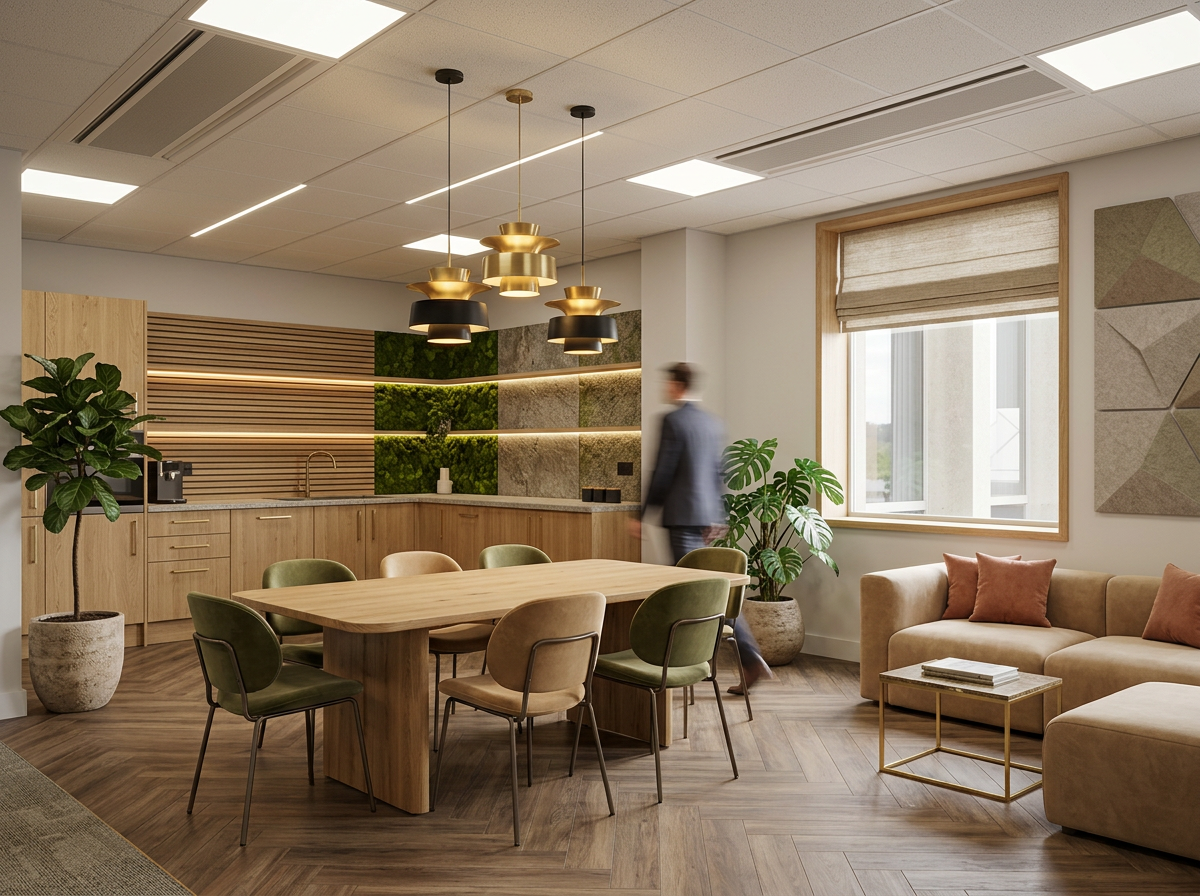
Nature-connected. Smart by purpose.
Our architectural approach brings biophilic design, useful smart products and evidence-informed material choices into one workspace perspective.
Explore Our Approach ↗Six checks behind a considered choice.
A design perspective built around context, technical understanding and informed product thinking.
Retain before replacing.
Understand the activities and constraints. Assess which existing elements can be reused, rearranged or repaired before recommending new products.
Connect with nature.
Consider daylight, views, appropriate planting and natural or nature-inspired elements. Account for glare, water, drainage, available light and ongoing care.
Make intelligence useful.
Identify a real task before selecting controls, sensors, connected lighting or monitoring. Review interoperability, power, data handling, subscriptions and support.
Look beyond the finish.
Check actual composition and documented origin rather than appearance. Consider coatings, adhesives, maintenance, durability and replaceable components.
Ask what supports the claim.
Request product-specific documents, the claim scope, assessment method and verification source where available. Do not generalize evidence from a brand to every product.
Explain what is unresolved.
Separate proposal, supplier information, independent evidence and hands-on testing. Identify missing information and avoid unsupported energy, health, acoustic or carbon outcomes.
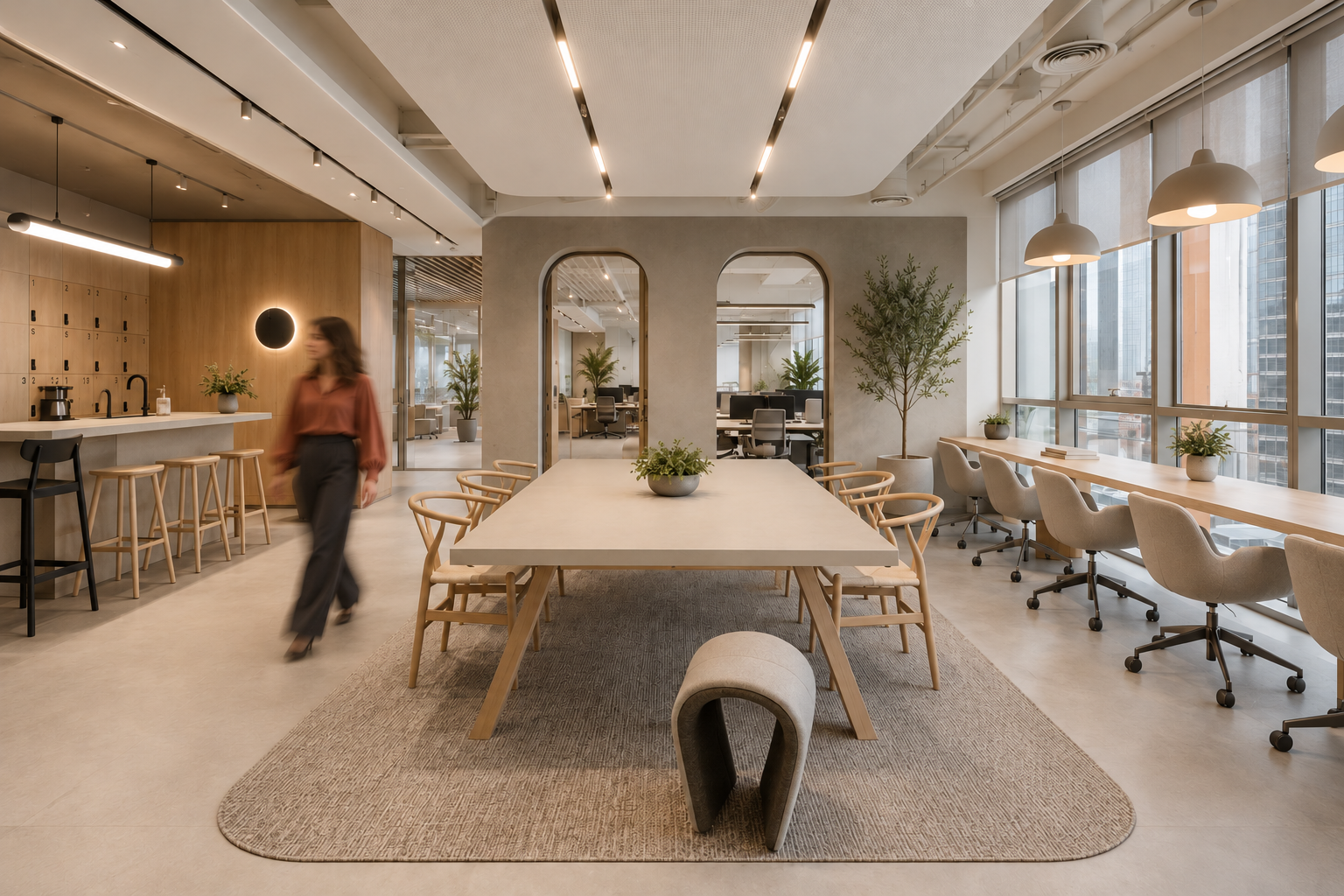
Context turns a product into a considered choice.
Layout, natural light, material choices and technology must be assessed together. A compelling image is the beginning of review, not evidence of performance.
Questions before specification.
Beyond visual inspiration, a useful product decision should account for the realities of the space.
Does it belong here?
Consider proportion, materials, appearance and how a product relates to the architectural setting.
Does it do the job?
Understand intended use, functional requirements and whether the product addresses a real need.
Will it work together?
Consider compatibility with nearby furniture, electrical infrastructure, devices and other systems.
What does it require?
Think about installation, power, connectivity, maintenance and any specialist requirements.
What supports the claim?
Product specifications, manufacturer documentation and evidence matter, especially for performance and environmental claims.
Wood products are not automatically zero carbon.
We are interested in wood and other workspace materials with credible sourcing and useful environmental information. We use the exact product claim and its boundaries rather than applying a blanket green label.
Know the material
Confirm whether the product is solid timber, veneer, composite board or a wood-look surface. Review composition, finish, adhesives, maintenance and sourcing information.
Know the carbon scope
Ask which life-cycle stages, geography and assumptions are included, and whether the claim depends on offsets. Keep the source, date and model alongside the claim.
Know the comparison
A lower-carbon comparison needs a stated baseline and comparable assessment boundaries. Low carbon, carbon neutral and net zero are not interchangeable labels.
The whole
is the point.
Architecture, furniture and technology influence each other. We approach workplace thinking through their relationship, not their separation.
A connected
way of
thinking.
Spatial planning gives the environment structure. Furniture supports its activities. Technology shapes how people interact with it.
Each informs the other. That connection makes the overall idea stronger.
Long-term use belongs in the brief.
Consider how a product will be installed, maintained, repaired or adapted as workspace needs change.
A new connected feature or natural-looking finish should earn its place through a useful role, suitable requirements and reliable product information.
Explore Our Focus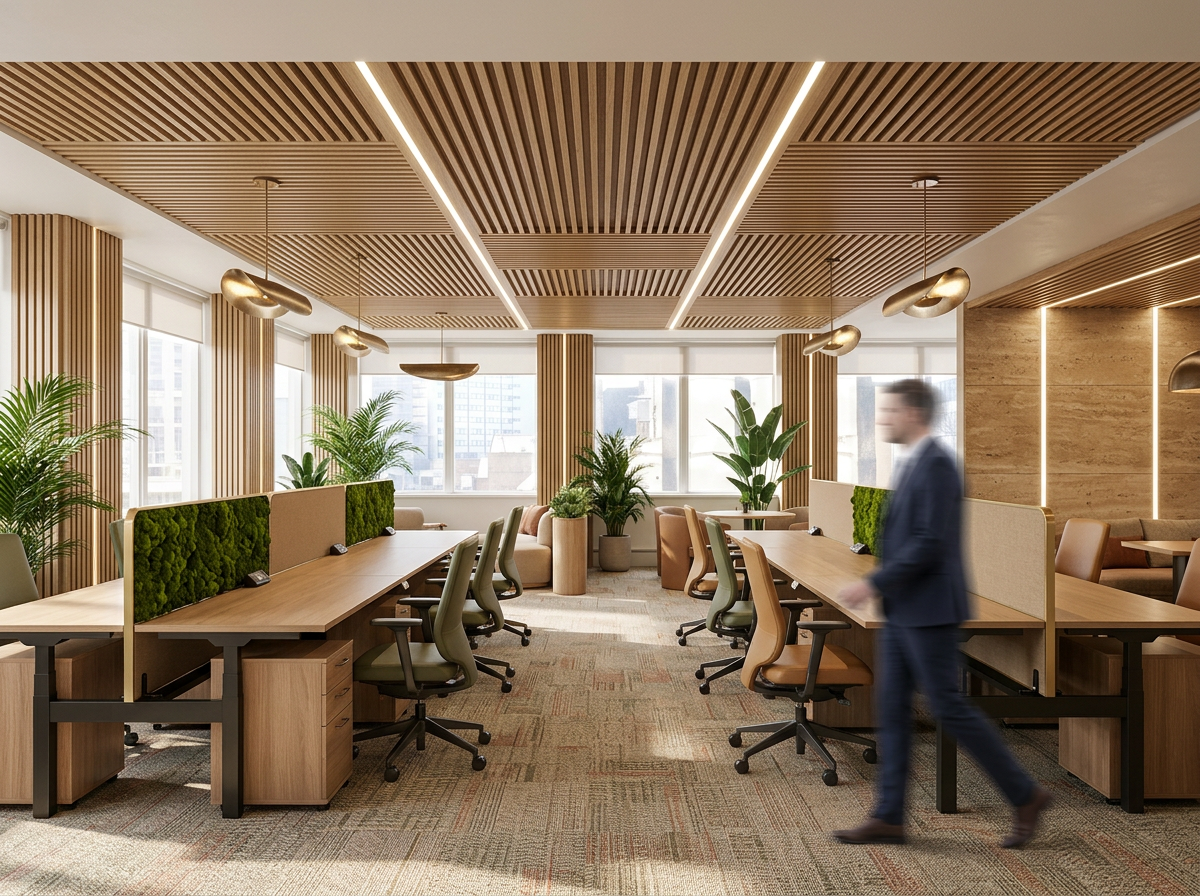
What we ask suppliers to share.
The aim is enough information to make and explain a suitable choice, not a generic sustainability badge.
Function & compatibility
Model numbers, dimensions, mounting, power, controls, connectivity and supported platforms. For connected products, include data and subscription requirements.
Care & useful life
Installation and service requirements, warranty scope, cleaning, replaceable parts, repair options and availability in the intended market.
Environmental information
Product composition and sourcing documents, relevant emissions or environmental assessments and the specific evidence behind any carbon claim.
Explore the
difference
in context.
Discover our work or start a conversation about design, furniture and connected workplaces.